
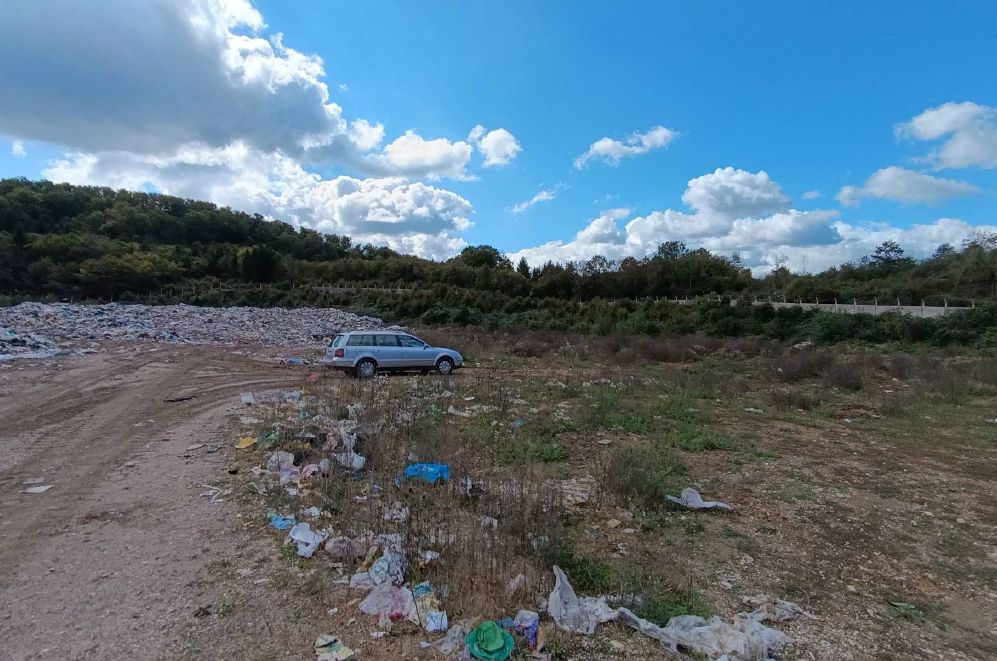
Krasulje-Peći Landfill
Above guideline valueMedia tested
Summary
Krasulje-Peći is an active municipal-waste landfill north of Ključ, about 7,500 m² in size, reached by a gravel road off the M-15 main road. Waste is still tipped, compacted and covered here, with some hand-sorting on site. It sits on karst limestone-dolomite bedrock of medium-to-high permeability, above fissured aquifers with rapid subsurface flow, and there is no leachate-collection system. The nearest watercourse, the river Sana, is about 5 km away and the Krasulje drinking-water source about 1.5 km. Only soil was tested. The findings show moderate contamination: cadmium, nickel and cobalt were above the level at which land is no longer considered clean, but no parameter reached the more serious level that would require cleanup.
Assessment findings
Findings of concern
- Cadmium was above the level at which land is no longer considered clean throughout the tested soil — in both the surface and the deeper layer.
- Nickel, too, was above that "no longer clean" level throughout the tested soil.
- Cobalt was above that level in the tested surface soil.
Positive findings
- None of the elevated metals reached the more serious level indicating that cleanup is needed — all stayed below that threshold.
- Petroleum-related pollutants were within limits in all the soil samples.
- Lead, selenium, copper, zinc and chromium were within limits across all the tested soil.
The project results have been submitted to the competent institutions as a basis for improving regulation and for strategic planning of further activities.
Legal basis
- Rulebook on limit and remediation values of polluting, harmful and hazardous substances in soil (Official Gazette of RS No. 82/21)
Due to the absence of reference values for soil and sediment in the Federation of BiH, the Republika Srpska rulebook is applied as a reference framework to ensure methodological consistency between the entities.