
Gradina Sludge Impoundment – ArcelorMittal Omarska
Above remediation valueMedia tested
Summary
The site is the Gradina sludge impoundment, an industrial facility for depositing sludge from iron-ore processing within the ArcelorMittal mining complex in Prijedor. It was formed by building an earthen dam across a natural valley, creating a closed basin for settling sludge over about 119 hectares, almost without vegetation and with no residential buildings. This is the most contaminated of the three surveyed sites in the complex: in the deposited material, copper, nickel and cadmium reached a level indicating that cleanup is needed, and selenium reached that level in part of the deposits and in the lake sediment. In the impoundment lake several metals were above water-quality limits, while pollution linked to oil stayed within limits.
Assessment findings
Findings of concern
- In the deposited material, in the surface and deeper layers, copper, nickel and cadmium reached a level indicating that cleanup is needed, and selenium reached that level in part of the deposits and in the lake sediment — the most serious findings at the site.
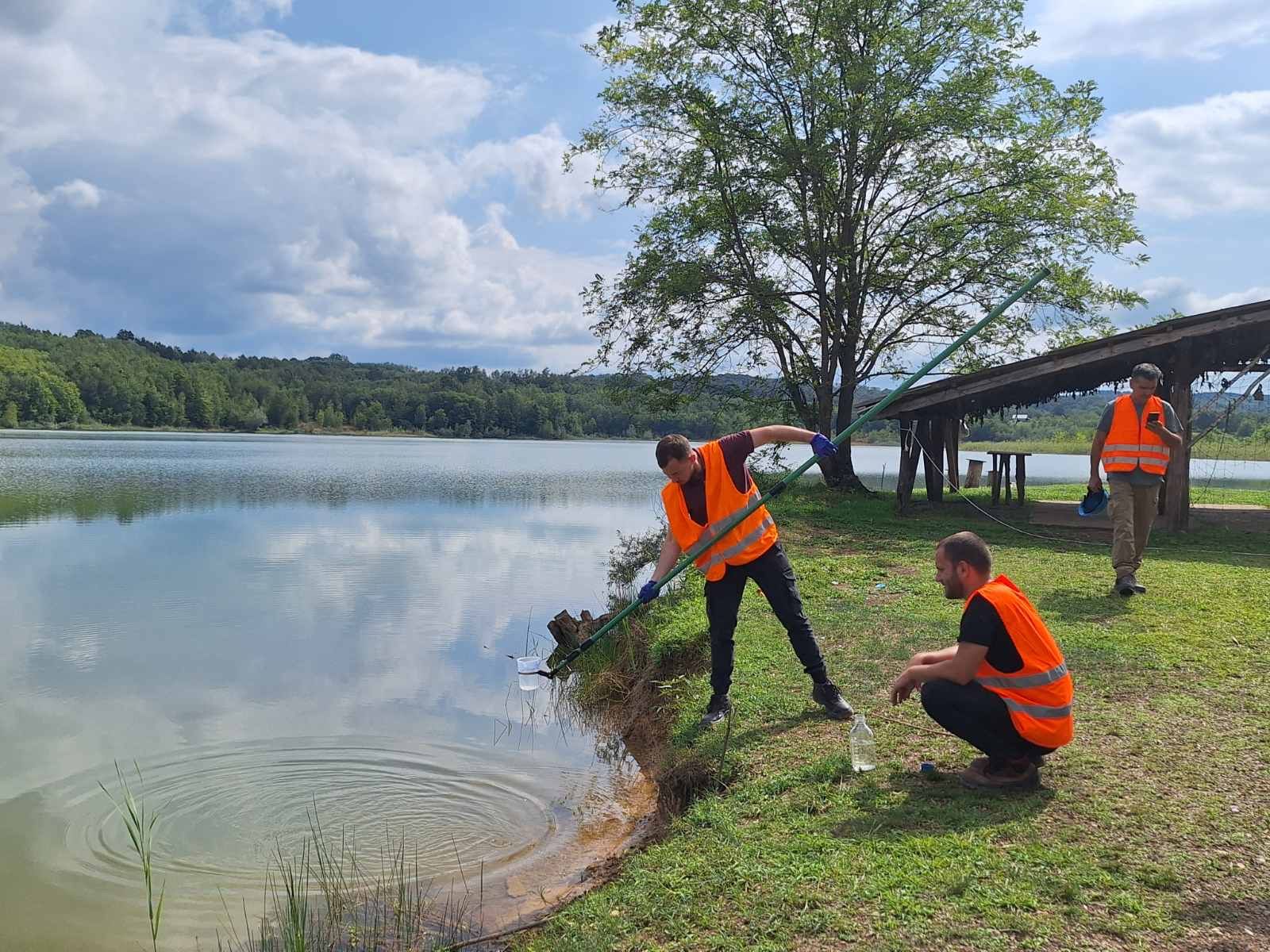
- In the impoundment lake, copper, cobalt, lead and manganese were above water-quality limits, and cadmium was above the limit in the stream flowing off the site.
- Cobalt, zinc and molybdenum were above the level at which land is no longer considered clean in parts of the deposited material.
Positive findings
- Lead, chromium, zinc and arsenic stayed within remediation limits in the deposited material and sediment.
- Oil-related pollutants and combustion-related compounds were within limits in the soil and sediment.
- At the second lake sampling point the tested substances met the water-quality limits, and oil-related and combustion-related pollutants met the limits throughout the water.
Photo gallery
The project results have been submitted to the competent institutions as a basis for improving regulation and for strategic planning of further activities.
Legal basis
- Rulebook on limit and remediation values of polluting, harmful and hazardous substances in soil (Official Gazette of RS No. 82/21)
- Decree on water classification and watercourse categorization (Official Gazette of RS No. 42/01)