← Back to map
Dolovi Landfill
Above guideline value Note. This is a preliminary assessment. The general conclusion of the report is that the location requires further detailed analysis. The data shown is not a final risk determination.
Media tested
Summary
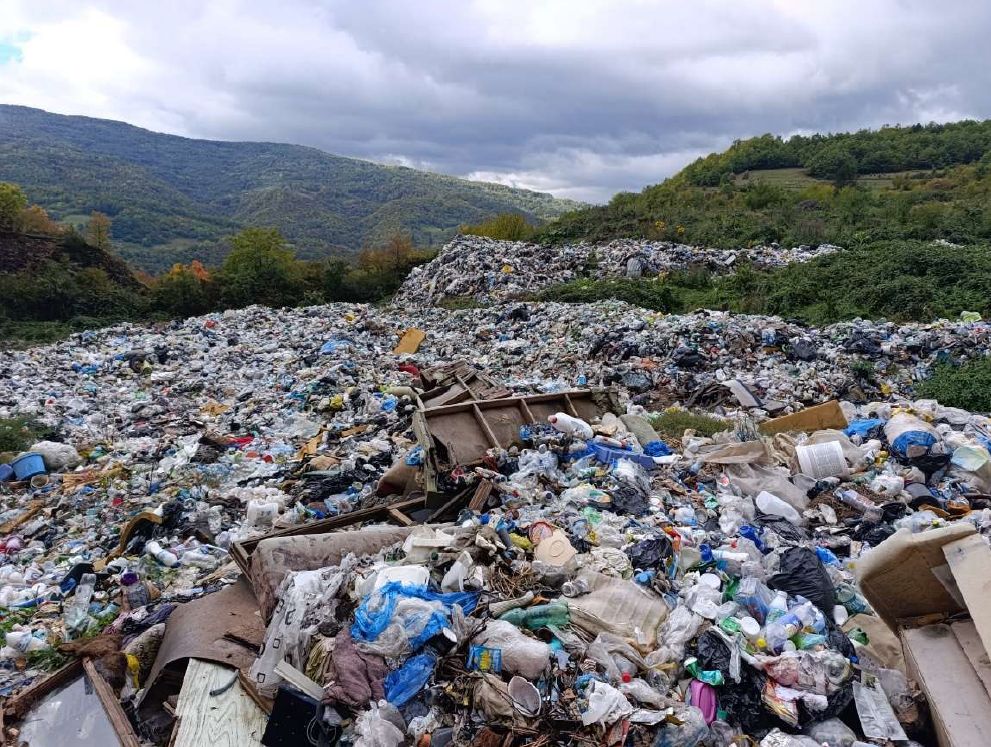
Dolovi is a small local municipal-waste landfill of about a quarter of a hectare, without supporting infrastructure, set beside the Brodar–Rudo main road near the river Lim. Surface and deeper soil layers were tested. No substance reached a level indicating a need for cleanup, but cadmium and nickel throughout the soil, and copper and zinc in places, were above the level at which land is no longer considered clean.
Assessment findings
Findings of concern
- Cadmium and nickel throughout the soil were above the level at which land is no longer considered clean.
- Copper in the surface soil and part of the deeper soil, and zinc in one surface-soil sample, were also above that level.
Positive findings
- No tested substance in any soil sample reached the level indicating a need for cleanup.
- Oil-related pollutants, cobalt, lead, selenium, chromium and combustion-related compounds were within the prescribed limits.
Photo gallery
The project results have been submitted to the competent institutions as a basis for improving regulation and for strategic planning of further activities.
Legal basis
- Rulebook on limit and remediation values of polluting, harmful and hazardous substances in soil (Official Gazette of RS No. 82/21)