
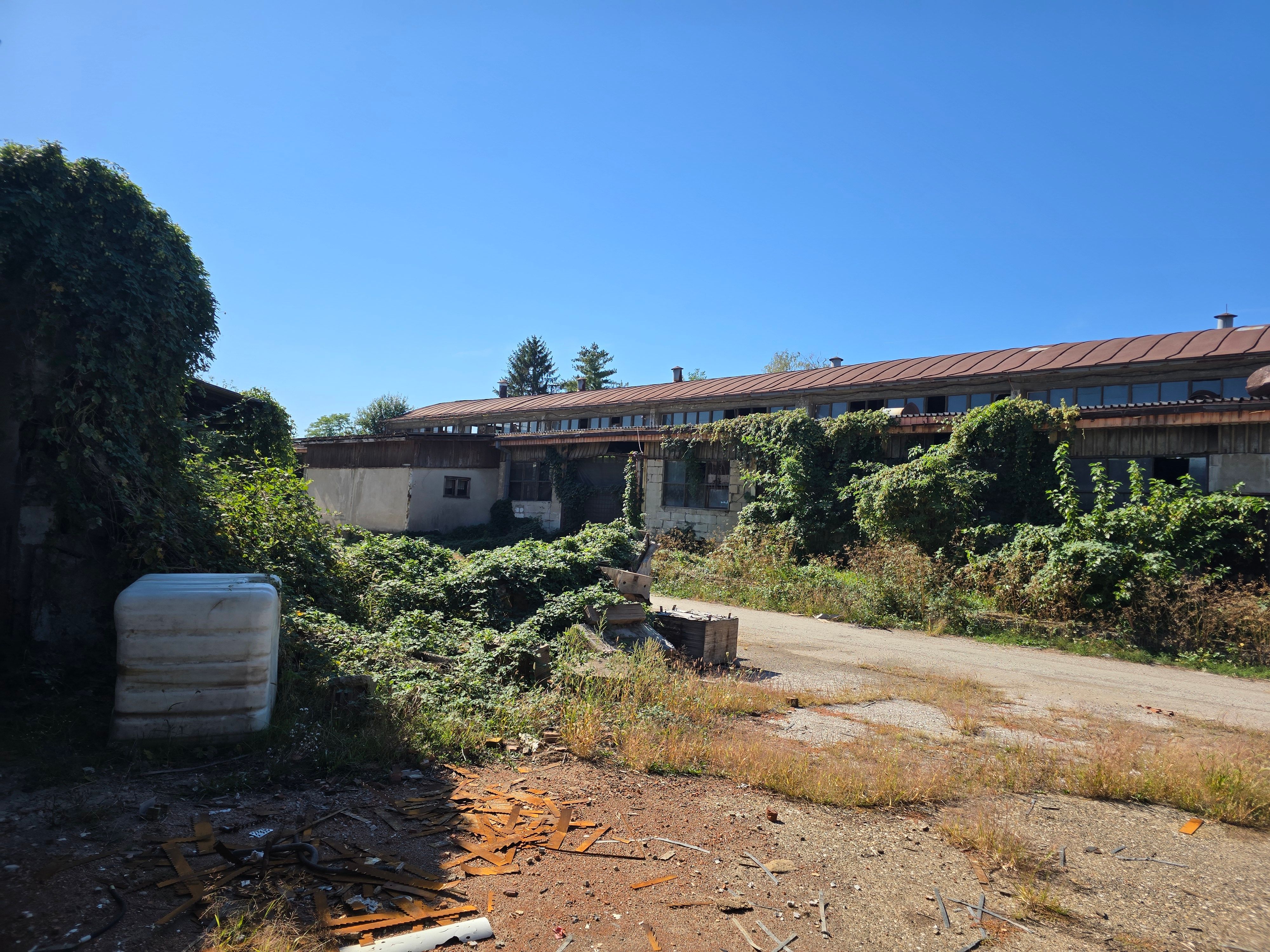
Konjuh Industrial Complex
Above remediation valueMedia tested
Summary
A former wood-processing and furniture complex in the Živinice industrial zone, today largely abandoned with several derelict buildings. Extensive testing of soil and subsoil found widespread heavy-metal contamination — nickel was at a level indicating that cleanup is needed in every sample — together with very high combustion-related pollution in one sample. The general conclusion of the report is that the location requires further detailed analysis.
Assessment findings
Findings of concern
- Nickel was at a level indicating that cleanup is needed in every soil and subsoil sample — the contamination is spread across the whole site, not limited to a single spot.
- In individual soil samples, cadmium, cobalt, zinc, copper, lead and chromium also reached a level indicating that cleanup is needed.
- In one soil sample, combustion-related pollutants were extremely high, far above the level indicating that cleanup is needed.
- A further set of metals was above the level at which soil is no longer considered clean across many of the samples.
- There are wells on the site itself, with shallow groundwater and the Oskova river close by, as well as residential areas exposed to dust from the site.
- Derelict buildings and unknown buried infrastructure may be continuing sources of contamination, and the planned redevelopment and earthworks could remobilise heavily contaminated soil.
Positive findings
- Oil-related pollutants were within limits in every soil and subsoil sample.
- Pollutants associated with industrial solvents were within limits in the samples tested.
- Pollutants associated with industrial oils were within limits in the sample tested.
- Selenium and molybdenum were within limits in every sample, and mercury was within limits where it was measured.
- In the subsoil, cadmium, copper and chromium were within limits in every sample.
Photo gallery
The project results have been submitted to the competent institutions as a basis for improving regulation and for strategic planning of further activities.
Legal basis
- Rulebook on limit and remediation values of polluting, harmful and hazardous substances in soil (Official Gazette of RS No. 82/21)
Due to the absence of reference values for soil and sediment in the Federation of BiH, the Republika Srpska rulebook is applied as a reference framework to ensure methodological consistency between the entities.